|
The following article was printed in the December 2001 issue of The
CPA Journal.
"Global Demand for the CPA Exam"
by Randy Howard, Kotaro Anjo, and Irvin N. Gleim
Foreign Accountants Covet the CPA
Currently, the CPA exam is administered only in the United States
or one of its territories (Guam, the U.S. Virgin Islands, Puerto Rico).
Although, some state boards of accountancy (which administer the exam)
discourage international candidates (non-U.S. residents or citizens)
from taking the CPA exam. Many professional accountants in other
countries wish to pass the CPA exam to prove their knowledge of U.S.
accounting standards.
The authors argue that it is in the national public interest to
encourage professional accountants throughout the world to take and
pass the CPA exam. It will improve accounting practice, promote U.S.
leadership in international commerce, facilitate international trade
and finance, and help underdeveloped nations create efficient,
market-based economies.
Population growth and advances in transportation and communications
have made the world smaller, and the global economy daily becomes more
of a reality. One aspect of globalization significant to the accounting
profession is the movement toward global communication. English has become
the second language of choice, particularly in business, begun by the colonial and commercial sweep
of the British Empire and extended by the cultural and economic effects
of U.S. industry, especially entertainment and the Internet.
What will be the financial language of the global economy? Accounting
has long been recognized as the language of business, and the world is working
toward global accounting standards. In accord with well-established principles
of information economics, the widespread adoption of such standards will
promote free trade and efficient international operations by removing the
barriers created by competing accounting systems.
The role of the U.S. Uniform CPA Examination in this context is crucial.
By opening the CPA exam to candidates from abroad, the U.S. accounting
profession will be able to adapt to, guide, and benefit from the trends
of globalization and convergence.
The developed countries have slowly begun to accept that convergence of
their national standards with International Accounting Standards (IAS)
is a necessary step for the orderly globalizations of capital markets.
Accounting Standards setters in the U.S. and other nations have begun to
work more closely with the new International Accounting Standards Board (IASB)
to accelerate the convergence of global accounting standards. For example,
SFAS 128 substantially harmonized earning per share calculations with IAS 33;
both standards were issued in February 1997. Another example is the ongoing
development of XBRL, a computer-based method of producing and sharing
financial information through the standardization of data elements. One of the XBRL data dictionaries
currently being developed by a consortium of U.S. accounting, information
technology, and financial services entities is designed for use by all
companies that adhere to IASB standards.
The incremental progress toward convergence of U.S. and international
accounting standards should continue as companies increasingly enter business
combinations and raise capital in foreign markets. Foreign companies
that want to raise capital in the U.S markets have strong incentives to
improve the transparency of their financial reporting in order to comply
with SEC standards and forge relationships with U.S. companies.
For the foregoing reasons, market forces are pushing strongly to make
the U.S. CPA designation the global standard. For the past few years, each
May and November the CPA exam has attracted an estimated 3,000 to 5,000
international candidates. Currently, most non-U.S. candidates come from
countries in Asia (e.g., Japan and Korea) and the Middle East (e.g., Saudi
Arabia and Jordan). These candidates must travel to one of the 54 U.S.
jurisdictions (the 50 states, District of Columbia, Puerto Rico, Guam, and
the U.S. Virgin Islands) to sit for the U.S. CPA exam. Chartered Accountant
candidates from Canada and Australia can, however take the International
Uniform CPA Qualification Exam (IQEX) in their home countries. The IQEX
is a computer-based, 4.5-hour exam that focuses on the differences between
accounting and auditing standards in the U.S. and Canada and Australia and
sets the precedent for offering a CPA exam outside the United States.
Why Do International Candidates Take the U.S. CPA Exam?
Consider a simple example. Assume that a Japanese business school
graduate applies for an accounting position with a U.S. firm's Japan office.
The management of the firm may want assurance that the applicant
understands both U.S. and Japanese accounting standards. Furthermore,
management may want to know whether the accounting graduate has a
working knowledge of English. An effective way to prove this competence is
for the candidate to pass the U.S. CPA exam.
Many Japanese companies doing business with U.S. companies also want
accounting graduates with knowledge of U.S. accounting standards. In
addition, companies from other nations doing business in Japan seek
Japanese accounting graduates that understand U.S. accounting standards.
Despite their interest in the CPA exam, accounting graduates in Japan and
other foreign countries rarely wish to practice in the U.S. In fact, they
are generally not concerned with receiving a permit or license. What is
most important to them is the ability to provide employers with verifiable
evidence that they have the accounting and English skills necessary to pass
the U.S. CPA exam.
Another reason that the CPA exam is growing in international importance is
that some countries do not have a strong national licensing exam. Hence,
passing the CPA exam provides a credential for which there is no comparable
domestic substitute and which enhances a candidate's attractiveness to
both domestic and international firms.
Benefits to the U.S. Accounting Profession
Having accountants from around the world become experts in U.S. accounting
standards would provide distinct benefits to the United States. U.S.
companies operating in foreign countries would be able to hire residents that
understand U.S. accounting standards. Still greater benefits will accrue to
U.S. companies operating abroad when local standards approximate U.S. standards.
U.S. companies in foreign markets would then enjoy the same globalization advantages as
foreign companies in the U.S. market.
In addition, as the number of foreign
CPAs increases, the likelihood that international standards-setting bodies
will adopt U.S. GAAP as their reporting standards also increases. On the
other hand, if the CPA exam is not available to foreign-educated accountants, they will become certified in
other systems of accounting, and the progress toward the adoption of a
global financial language similar to U.S. GAAP may be impeded.
Challenges for International Candidates
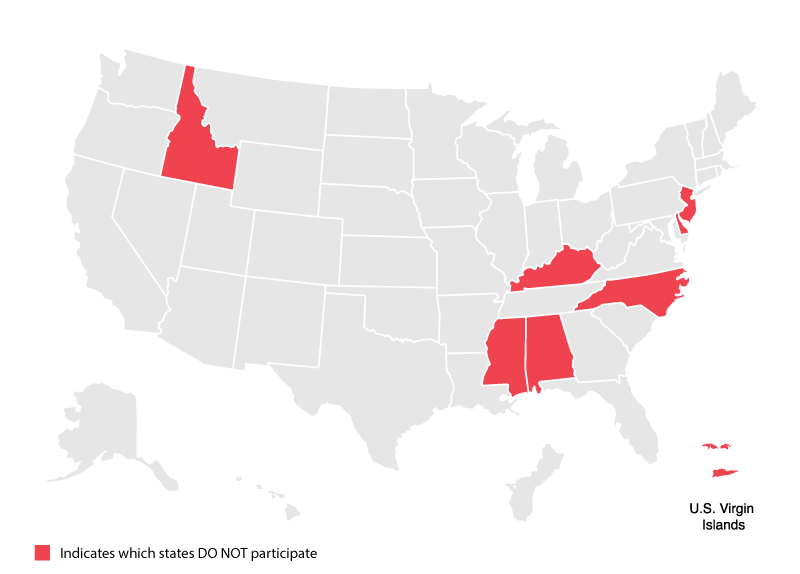
Eligible states. The first challenge for
international CPA candidates is finding a state board of accountancy willing
to permit non-U.S. candidates to sit for the CPA exam. Approximately half of
the state boards have residency or citizenship requirements. Of the boards
that do allow non-U.S. candidates, few will accommodate an individual without
significant U.S. accounting education, generally available only through U.S.
universities. The states with the largest number of international candidates,
in order, are Delaware, California, Hawaii, Guam, Illinois, and Washington.
Other states with significant numbers of international candidates are Alaska,
Montana, New Hampshire, Maine, Virginia, and Vermont. A recent gold medal
winner came from Germany to take the CPA exam in Washington.
Travel. International candidates incur significant
transportation and lodging costs to travel to a CPA exam site in the United
States. More importantly, international candidates do not enjoy ideal
circumstances when taking the exam: They may have traveled for many
hours, suffer from jet lag, and encounter logistical problems immediately
beforehand.
Visas. International candidates from countries
such as Japan have little trouble obtaining a travel visa to take the U.S. CPA
exam. On the other hand, for candidates from some countries in Asia,
South America, and the Middle East, obtaining a travel visa may be difficult
or even impossible.
Misconceptions. The reluctance of state boards to
extend their eligibility requirements may be based in part on the misconception
that international candidates will compete with U.S. CPAs for jobs in the
United States. Such fears are groundless because admission to the CPA exam
does not confer a right to immigrate. Even so, the profession as a whole
would gain from an influx of accountants from abroad who would bring their
talent, energy, ambition, and new ideas to this country. The benefits would
be similar to those enjoyed by the sciences, engineering, information
technology, and other disciplines that have absorbed significant
immigration of capable foreign nationals. Furthermore, the globalization of the
economy, accounting standards, and the CPA exam will offer opportunities for
growth in the worldwide market for services offered by CPAs. Free trade in goods and services
ultimately benefits all nations. Restricting access to the U.S. CPA exam
should be viewed as protectionism that is harmful to the U.S. national interest.
Challenges for State Boards
Some state boards of accountancy have adopted a progressive attitude toward
the global demand for the CPA and have worked hard to help international
candidates sit for the CPA exam. Other state boards, however, have
modified their rules in ways that effectively reduce their number of
international candidates.
Costs and inefficiencies. An understandable
concern of the state boards is the added labor, costs, and complexities of handling the applications of
international candidates. Routine exchanges of mail with such candidates
require additional resources, and telephone communication is often
complicated by the differences in time zones. Although faxes and e-mail are
less affected by geographical factors, communications with individuals for
whom English is a second language is sometimes difficult. A candidate may
feel comfortable communicating in English about technical or quantitative
matters but still find communicating in English about non-accounting matters
to be awkward.
This problem of communication could be largely overcome by
having clear application procedures and instructions to guide international
candidates through the process. Charging an additional fee to cover
additional costs of handling international applications would willingly be
borne by international applicants, especially if they could take the CPA
exam in their home countries and save the substantial travel cost (e.g.,
Japanese candidates spend from $1,500 - $3,000).
Licensing CPAs. Another concern of some
state boards is that of licensing CPAs residing outside a state's
geographical boundaries. In the U.S., a number of CPAs hold licenses to
practice in more than one state. State boards are understandably concerned
about how to effectively monitor the activities of CPAs residing outside of
their state borders. Such concerns are magnified when the CPAs reside in
other countries.
One method to mitigate these concerns is to allow international
candidates to sit for the U.S. CPA exam and then, upon successful
completion, be given a certificate stating that they have passed the CPA
exam but are not licensed to practice. Such a certificate would satisfy
the needs of the vast majority of international candidates. It also would
be similar to the two-tier system adopted by some states, under which
individuals possess either certification status or permit-to-practice status.
Exam Security. State Boards of Accountancy have a natural fear of not
being able to guarantee adequate exam security when administering the CPA
exam. Since the CPA exam went to its current, nondisclosed format, exam security
has been an issue of paramount importance.
The security issues related to the pen and pencil exam, administered in many different sites, will
change substantially once the computerized CPA exam is introduced in 2003.
Prometric, a division of Thomson Learning Company and a world leader in
computer-based testing, has testing centers and provides the same service
and security in over 250 international locations as in its U.S. testing centers.
National security and visa issues.
The tragic events of September 11 have significantly reduced the volume of
international air travel. In addition, persons wishing to obtain visas for
short-term visits to the United States are likely to experience greater
difficulties than in the past. Unless a new way of thinking is applied, the
number of international candidates taking the U.S. CPA exam may drop dramatically.
Augmenting efforts to strengthen national security will be another benefit
stemming from the international administration of the CPA exam. The reduced
number of international visas requiring review by the Immigration and Naturalization
Service will allow more time to review other visas.
Other Professional Examinations
It is common for U.S. professional certification examinations to be administered to
international candidates in their home countries; for example, the
professional engineering (PE) certification exam is offered in
several countries. The list of U.S. professional accounting-related
examinations administered in other countries is extensive and includes the
following:
- CMA: Certified Management Accountant
- CIA: Certified Internal Auditor
- CFA: Certified Financial Advisor
- CFM: Certified in Financial Management
- CISA: Certified Information Systems Analyst
- CBA: Certified Bank Auditor
Two examples of the demand for exams administered outside the
U.S. are the CFA and CMA. In 1995, both exams were offered to
a handful of candidates in Egypt. By 2000, both exams had over 300 applicants.
Lagging behind other professional organizations that are already offering
their exams in other countries only strengthens criticism of CPAs for
not providing "information relevant to the changing business world."
Failing to offer the U.S. CPA exam to international candidates in their
countries works against the profession's goal of leading the global
harmonization of accounting standards. In addition, this failure forces
thousands of international candidates to travel to the U.S. in order to take
the CPA exam. Certainly people in foreign countries are aware that other U.S.
professional organizations have responded to the global
economy in a more timely fashion than U.S. CPAs.
Modest Steps Forward
The following steps may encourage state boards of accountancy to
accept international candidates:
- The CPA exam should be administered in foreign countries. This
practice will be practical once the CPA exam is computerized in 2003.
- "Exam only" certificates rather than "permits to practice" should be
issued to international candidates wishing to pass the CPA exam but not to
practice public accounting in the United States.
- International candidates who pass the CPA exam but do not have a
permit to practice should be required in indicate this on business cards,
resumes, and correspondence.
Website.
The authors have established a website (http://www.msubillings.edu/rhoward/) related
to the issue of administering the CPA exam in other countries. The website contains an open letter to the AICPA
and NASBA. To date, a wide range of organizations and individuals from 17
countries, located in every continent, have added their names to the open
letter as supporters of the international administration of the CPA exam. The
supporting organizations include the American Chambers of Commerce in Japan
and Egypt. Countries represented include: Australia, Brazil, Canada, China,
Egypt, France, Hong Kong, India, Japan, Nairobi, Netherlands, Oman, Pakistan,
Saudi Arabia, Taiwan, United Arab Emirates, and the United States.
The U.S. CPA has the opportunity to become the accepted global accounting
designation. If the U.S. accounting profession fails to capitalize on the
demand for a globally recognized accounting certification, others will seize
the opportunity.
Randy Howard, CPA, is a professor emeritus at Montana State
University-Billings, Kotaro Anjo is the CEO of Anjo International,
and Irvin N. Gleim, PhD, CPA, is a professor emeritus at the
University of Florida.
|
|