Contact Us : 800.874.5346 International: +1 352.375.0772

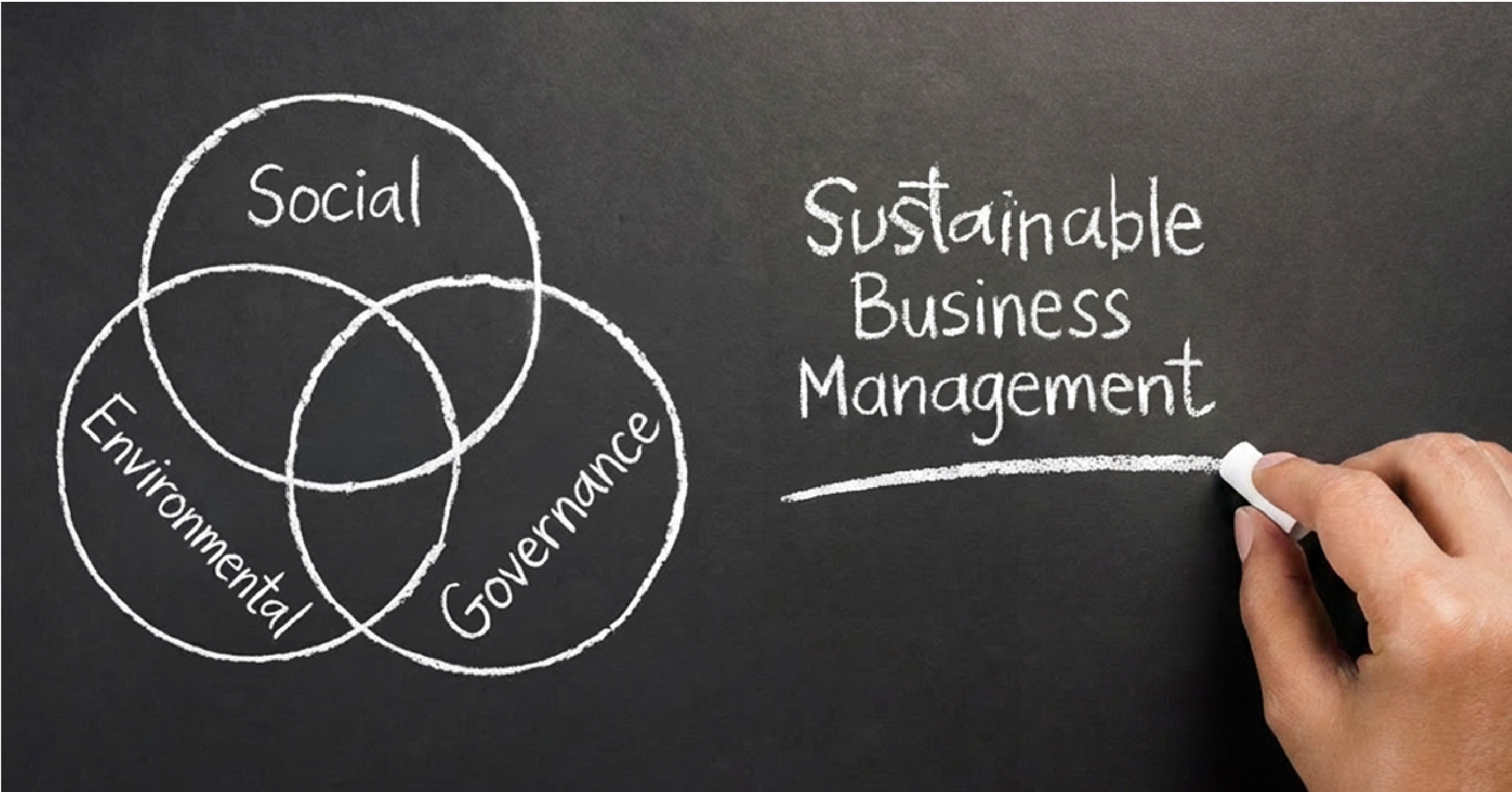
Modern business demands that a broader approach is taken towards the concept of profit, creating a need for sustainable business management. Sustainable business management is about making decisions that build internal and external value over time. Long-term value creation is at the heart of sustainable business management. It may seem like an overwhelming task, but it’s an increasingly essential part of being a Certified Management Accountant (CMA®).
Sustainable business management removes the divide between the financial and the non-financial aspects of an organization. It allows businesses to generate long-term value by assessing environmental, social, and economic factors. It also puts a focus on ethical concerns and the need to act in the interests of all stakeholders.
These principles may urge businesses toward acts like choosing more environmentally friendly suppliers or investing more in a local community. This is done not only from the perspective of making an impact, but also because this is increasingly important for each organization’s own operations and risk management. The value created by these decisions is often difficult to quantify, but it still exists and can have a substantial impact on the bottom line and beyond.
Sustainable business management is not just about doing the right thing; it’s about creating value. Companies that practice sustainable business management can remain competitive in today’s marketplace while still embracing their ethical responsibility. Sustainable business management helps organizations use resources effectively and build strong relationships with customers, suppliers, employees, and other stakeholders.
Sustainable business management cannot be pinned down to specific behaviors that apply to all businesses. Instead, it involves making decisions that consider the entire ecosystem in which a company operates. For CMAs, sustainable business management is a critical factor in deciding what strategic direction to take, and how to allocate resources and handle corporate responsibility.
Sustainable business management is closely related to the concept of Environmental, Social, and Governance (ESG). ESG is a set of standards that organizations use to assess their performance on sustainability issues. ESG criteria are used to measure and manage the impacts of an organization’s operations on its financial performance, environmental impact, social responsibility, and corporate governance.
Although these concepts are linked, sustainable business management is much more holistic. A company may use these ESG factors to measure and report on its impact and performance, but for sustainable business management, you also need to incorporate these factors holistically into your strategic and operational decision making.
Integrated reporting is another concept that can help integrate sustainable business management. It is closely related and is based on integrated thinking. Integrated reporting is a process that encompasses the full range of an organization’s performance and considers the short, medium, and long-term impacts of a company’s decisions. It also looks at how an organization manages its relationships with stakeholders and considers economic, environmental, and social performance in its decision making and reporting.
Integrated reporting is becoming increasingly important in a world where sustainability considerations are significant. With integrated reporting, CMAs can be sure they are making decisions with the long-term sustainability of their businesses in mind.
Integrated thinking is essential for reporting in an integrated manner. It is the process of considering the interconnections between an organization’s various elements. It’s an integral part of sustainable business management.
Integrated thinking enables CMAs to understand how changes in one part of their business can have implications across the entire organization. All aspects of a company’s operations are considered, including financial and non-financial performance, sustainability, and stakeholder engagement. Through integrated thinking, social, governance, and environmental considerations no longer stand-alone but become an integral part of building a resilient business. Topics such as resource scarcity, risk management, and supply-chain resilience are part of day-to-day business decisions and thus help your organization in the long run.
While integrated reporting can support external compliance exercises regarding sustainability or ESG reporting, it is always based on integrated thinking, which is more concerned with internal management.
Sustainable business management is about creating a resilient business looks ahead to the changing environment and the impact that may have on the organization’s operations and future. Integrated thinking principles can be applied to manage organizations in a more sustainable manner, no matter what the external reporting requirements are. Sustainable business management and integrated reporting and thinking are flexible and can be available to any business around the world.
Sustainable business management is not currently a standalone topic on the CMA exam, but its implications are far-reaching.
Elements of sustainable business management are included in other topics, such as external financial reporting decisions (in which integrated reporting is addressed as a stand-alone topic on the CMA exam), corporate strategy, business ethics, and risk management.
Moreover, mastering sustainable business management offers an opportunity for CMAs to positively impact their organizations and the world. It’s about more than just passing the exam; it’s about doing the right thing for future generations.
In September 2021, the Institute of Management Accountants (IMA®) launched the Sustainable Business Management Global Task Force. The initiative seeks to raise awareness of the role that management accountants can play in achieving sustainable business goals. It also serves as a resource for CMAs and business professionals.
One of the task force’s initial actions was to publish a “Statement of Position on Sustainable Business Information and Management,” a collection of nine principles inherent in sustainable business management.
The role of CMAs in the sustainable business world cannot be understated. CMAs are uniquely positioned to help shape sustainable business practices, as they’re often responsible for communicating financial performance to stakeholders. They understand corporate strategy and how to use metrics to quantify progress toward sustainability goals.
CMAs are also well-versed in the use of cost and profitability analysis, which can be an invaluable tool when it comes to making decisions about sustainability. The broad nature of their work gives CMAs powerful insight that can illuminate every aspect of the business.
Matters as diverse as choosing a supplier to setting new pricing are all influenced by environmental and social factors as well as cost. CMAs can make this information more digestible for management, enabling them to make informed decisions.
The concept of sustainable business management is not new, but it has taken on a heightened role in the world of accounting and finance, and CMAs have an important part to play.
By leading with an integrated mindset and leveraging the principles detailed by the IMA, management accountants can help guide their organizations toward a more sustainable future.

Brigitte de Graaff is an assistant professor of accounting at Vrije Universiteit Amsterdam, the Netherlands, where she earned her Ph.D. in Integrated Reporting and master’s degrees in Accounting & Control and Dutch Criminal Law. She is also the program director of the CMA program at VU Amsterdam. Dr. De Graaff is a CMA Gleim Instruct lecturer, an editor for Gleim CMA Review materials, and an experienced executive education instructor. She’s the Chair of IMA’s Global Board of Directors for fiscal year 2026-2027. She also chaired IMA’s Sustainable Business Management Global Task Force from 2021-2023 and serves on IMA’s Amsterdam Chapter Board.